Hybrid Vigour
December 2025
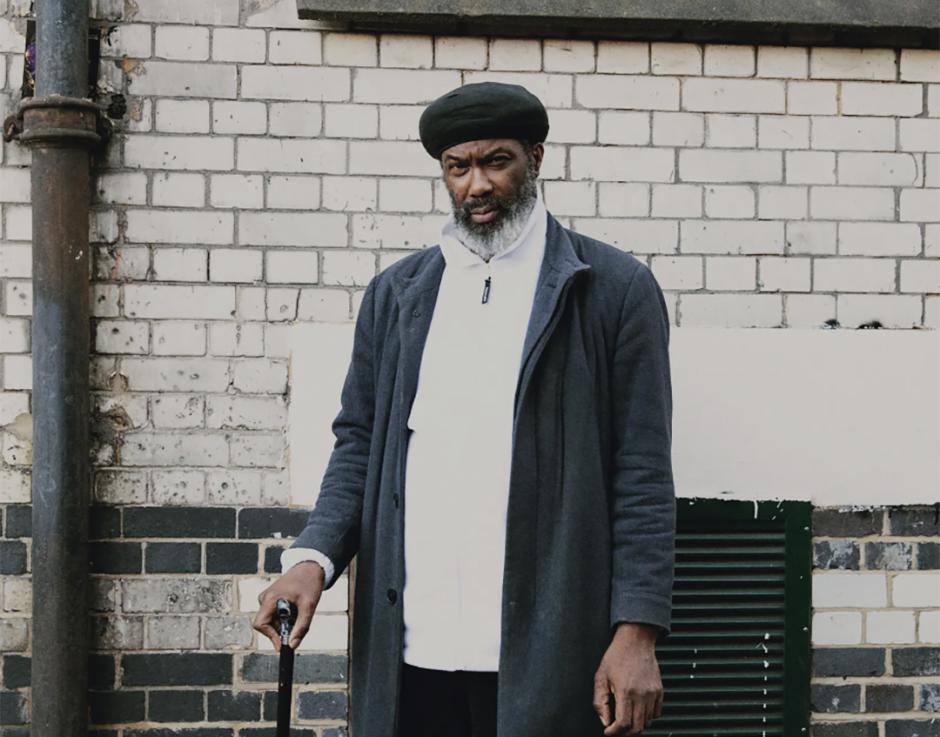
Pat Thomas. Photo by Ana Margarita Flores
Far beyond novelty or experiment, 2025 was the year that crossover projects rejected genre labels for endless sonic possibilities, writes Stewart Smith in The Wire 503/504
From Chris Williams and Lester St Louis in the US, to Pat Thomas and XT in the UK, improvised music is plugging in, literally and figuratively, to electronic currents from the club to conservatory. Cross-genre experiments have been happening for decades, but this is something new, going beyond fusion or hybridity. We’re seeing musicians with knowledge of multiple idioms taking real risks by exploding hierarchies between genres, performing in different spaces and correcting imperialist narratives.
In January 2025, I was blown away by Ambrose Akinmusire’s Honey From A Winter Stone. I’d dug the trumpeter-composer’s 2018 album Origami Harvest, where his jazz ensemble played off Kool AD’s rhymes and Mivos Quartet’s strings, but this was on another level. Its constituent elements – Akinmusire’s exploratory trumpet, vocalist Kokayi’s freewheeling reflections on Black male identity, Sam Harris’s elegant piano, chiquitamagic’s synth colours and grooves, Justin Brown’s intricate drumming, Mivos’s new music textures – are fully integrated into a visionary whole.
Akinmusire’s masterpiece is part of a wider conversation. A key question for jazz artists engaging with hiphop is how to maintain the spontaneity of improvised music within the recursive structure of the beat. Yet as hiphop has got noisier and more psychedelic, the possibilities for improvisors have opened right up. Embracing this are WRENS, the quartet of Ryan Easter on trumpet and vocals, Elias Stemeseder on synths and una corda piano, Lester St Louis on cello and electronics, and Jason Nazary on drums and synths. Their album Half Of What You See moves freely from deconstructed rhythms and percolating funk to beatless atmospherics, as acoustic extended techniques meld seamlessly with woozy electronics. As on Nazary’s 2021 album Spring Collection, or his collaborations with Saint Abdullah, the line between live playing, processing and production is deliciously blurred.
St Louis is one half of a formidable partnership with trumpeter Chris Williams. Stark Phenomena, their debut as HxH, is a beautifully realised journey into post-rave electroacoustic music, combining the timbral exploration of free improvisation with luminous synths, humid reverb and grainy static. The pair also have production credits on Pink Siifu’s BLACK’!ANTIQUE, bringing the trippy haze of HxH to the beatless coda of “(8)”. Williams has contributed to several of the rapper’s projects, but his role goes way beyond that of guest jazzer to reflect the interdisciplinary practice of HxH, his solo release Odu: Vibration II, and the Brooklyn supergroup History Dog.
The latter unit’s bassist Luke Stewart is also a member of Irreversible Entanglements, who have been central to this international community. Moor Mother might be their most prominent member, but saxophonist/synth player Keir Neuringer dropped one of the year’s finest albums in The Burning Bright Light, a collaboration between his group Dromedaries and writer/artist/activist Alex Smith aka Alexoteric. Informed by cyber/solarpunk and Black queer culture, Smith brings an Auto-Tuned lyricism to wild cosmic jazz.
Moor Mother’s 2020 collaboration with billy woods was a key marker in the ongoing conversation between improvised music, underground hiphop, electronics and noise. She also worked with Austrian drummer-producer Lukas Koenig, appearing on his 2023 album 1 Above Minus Underground alongside Nappy Nina, MC dälek, Elvin Brandhi and Chris Pitsiokos. Moor Mother and dälek contributed to RYOK, by Koenig, Audrey Chen and Julien Desprez’s synapse-frying trio Mopcut.
Together with Peter Kutin, Koenig and Brandhi form PLF, whose Skreamerz splices mutant strains of trap, noise, punk and improvisation. Brandhi is part of an outward looking wing of UK experimentalists dissolving the barriers between improvisation, noise and electronic music. Brilliant pianist Pat Thomas is also an inspired electronic musician, from his ‘klangfarbenmelodie in the dancehall’ junglism of the 1990s, to his recent scatterArchive albums using IRCAM TimeStretch software. On Reality Is Not A Theory, his duo album with Mark Fell, he situates piano within his collaborator’s teeming percussive timbres, showing a masterful understanding of electroacoustic textures, from King Tubby to Stockhausen.
Thomas’s [Ahmed] bandmate Seymour Wright is also pushing things forward with projects, including XT, his electroacoustic duo with drummer Paul Abbott. On 2023’s Deorlaf X, they incorporated Chicago house into free improvisation, while 2024’s YESYESPEAKERSYES saw them collaborate with Kavain Wayne Space, aka RP Boo. Last year’s album with sound artist Anne Gillis moves away from club forms, yet it continues their interest in “potential” sounds. There’s deep respect for tradition, but that focus on sound, rather than genre, is what makes this new music so exciting. The possibilities are endless.
This essay appears in The Wire 503/504 along with many more critical reflections on 2025. To read them, pick up a copy of the magazine in our online shop. Wire subscribers can also read the issue in our online magazine library.
Leave a comment