Steve Gunn's Portal on lonesome folk music
October 2014
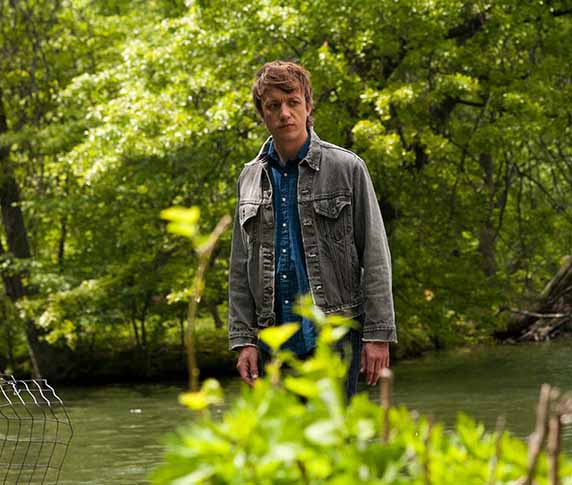
Photo: Constance Mensh
The guitarist and songwriter looks at solo artists in their most intimate creative moments. Gunn wrote The Wire 368 Inner Sleeve
The music I find most haunting has often been made by someone sitting alone with an instrument, perched in front of an isolated microphone in some cloistered space. Really lonesome music only makes sense if it has been created by one person. A solo recording can reach a level of intimacy that a recording of a group or ensemble just can't, offering a glimpse into a particular musical psychology and, very often, a window into a distinct time.
Skip James: “Cherry Ball Blues”
When I discovered old blues recordings, it was a revelation to me. In the late 1920s and 30s, there was such purity to the singing, and no really defined style that I could recognise. Skip James's voice is singular; it floored me when I first heard it. His haunted yet sweet singing style evokes mystery and particular devotion.
Jill Cislaghi: “Jesse”
This is one of my favourite privately pressed records from the 70s. I discovered this one while reading Patrick Lundborg's informative book The Acid Archives. Lundborg's description of Cislaghi's Friends Of Mine intrigued me and I immediately search for it (I still haven't found an affordable copy). This record was pressed in an edition of 500 in 1977, primarily to be distributed to Jill's classmates at Regis College in Massachusetts. The songs are sparse and haunting, lovely and melancholic.
Blind Mamie Forehand: “Honey In The Rock”
I first discovered this song on the compilation American Primitive Vol. 1: Raw Pre-War Gospel (on the Revenant label) when it was released in 1997. I was just getting into this kind of music and this was the first new compilation of 78s that I found. Besides Harry Smith's folk anthology, for me this is the best compilation of pre-war music ever released. John Fahey and historian Gayle Dean Wardlow carefully put these songs together from their collections, and it was from this release that I learned Fahey had an extensive collection of 78s. In this song, Mamie's voice is so sweet and foreboding. The constant bell in the background adds to the urgency of her gentle crying voice.
Tracy Cole: “On Top Of The Mountain”
This is from an obscure homemade folk album from Arizona in the 70s. I'm not sure how many copies of this were created but I've heard that each album was personalised (another one I hope to own). Every copy was apparently signed by Cole and the artwork was applied by her hands with scotch tape. The singing is modest and childlike, giving the song a sweet and earnest quality. Her voice, coupled with the simple lyrics, give the song a charming, lonesome quality. The delicate echo and double-tracked acoustic guitar sound perfect. A simple song can often be the most effective.
John Lee Hooker: “Come On And See About Me”
John Lee Hooker had many albums and was one of the most popular blues singers to come out of the Mississippi Delta. I recently discovered this album, That's My Story, which features, on most of its songs, Mr Hooker playing solo and cutting loose with no restrictions. In my opinion, this is when some of these blues players have recorded their best material, without any back up, playing and singing and left to their own devices. Made in a single session in 1960 for Riverside Records, there's such heavy power in his singing and playing on this record. You can tell he was comfortable in the studio for this one – he's in his natural state. This record captures his true capabilities and has become a favourite of mine.
Dan Lewis: “Towards The Light”
This song is a true 70s stark loner lullaby gem. Dan Lewis's voice has reserved gentleness; it's as if he's singing to himself, without wanting to be heard. The lyrics are so damn sad. It makes you want to retire to the couch and hang out with a puppy or something. The doubled vocal harmony is a nice touch as well. Coming from Asheville, North Carolina, Dan Lewis's album really captures the bleakness of the 70s, along with the essence of the beautiful Blue Ridge mountain landscape that surrounds that wonderful city. Apparently he is still active in Asheville as a songwriter, recording artist and engineer. If you're in the area, dig around at antique shops, thrift stores, and ask the local record shop owners if they have seen this LP floating around anywhere – it's worth picking up.
Bob Desper: Portland's Lost Folk Hero
Unable to see, Bob Desper walked into a Portland studio in 1974 and cut an album of mostly improvised folk songs in one take. The result, New Sounds, is a lonely folk album, with classic 70s gentle vocals. But this one is a bit more haunted than usual. I came across his album in his hometown of Portland years back, and it has become one of my favourites. His incredible story adds to the mystique of this music. There is a deep sadness in Desper's singing and lyrics. His album New Sounds is a special one, and I was thrilled to see this excellent documentary pop up about him.
Leave a comment