
As lockdown begins to ease and protests over the killing of George Floyd fill the sonic landscape, Alan Licht examines the value of New York Public Library's anthology of nostalgic field recordings

The Wire contributor, musician and Decolonise Fest co-founder asks white readers: “Does the diversity of your record collection reflect the diversity of your real social life or approach to the world?”

John Morrison traces the new world routes mapped by the Philadelphia musician, promoter and Star’s End presenter
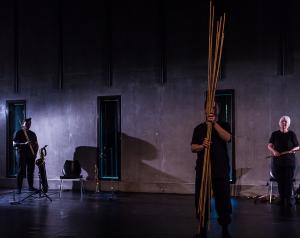
Elaine Mitchener's music theatre work Sweet Tooth, a powerful engagement with the brutalities of slavery, its links to the British empire and the sugar industry, and its contemporary echoes, has been made available to stream online. Here Mitchener compiles an extensive resource of relevant reading materials

The Wire 436 cover star's interviewer selects a range of tracks spanning the influential producer's career so far

In a sequel to his 2013 Bell Labs Flutes In Crisis column, Clive Bell takes a measure of the current state of Japan’s traditional bamboo flute

Paul Purgas's research trip to Ahmedabad to investigate the city's early Moog composers is the subject of the new BBC Radio 3 documentary Electronic India. Ahead of its broadcast on 17 May, Frances Morgan caught up with him to hear some original recordings and discuss modernism in India, the afterlives of instruments, and the connection between the National Institute of Design, electronic music and the Indian space programme

John Morrison on how the 1980s black music scene gave Kraftwerk the club-wise edge
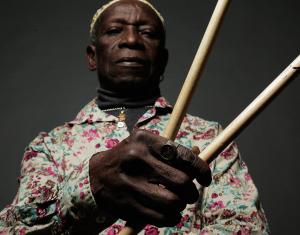
“The truth is that Tony could keep better time than any drum machine, but his emigration to Europe coincided with the increasing mechanisation of dance music.” Allen’s biographer and some time musical collaborator Michael Veal traces the ever evolving work of the heart-steady Afrobeat drummer

In this extract Harald covers the work of Swiss pianist and Feminist Improvising Group member Irène Schweizer, from her connections with South African exiles during the 1960s, to her involvement in women’s liberation and gay and lesbian movements

“Henry was not hired to fill the role of a bass player; he was hired to be Henry,” declares fellow bassist William Parker
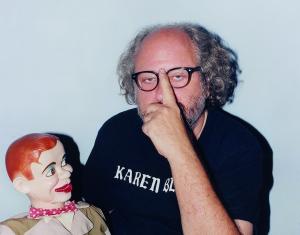
“Hal came up in a music industry that no longer exists,” observes Alan Licht, in his tribute to the US producer

The pioneering 1960s free jazz saxophonist learnt the high cost of freedom playing for change in New York's subways and parks before his late period rediscovery by William Parker, Cooper-Moore, and others. By Pierre Crépon
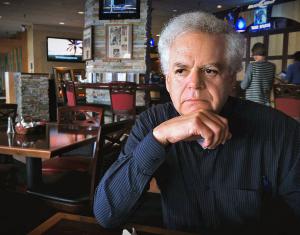
“Really it begins with instinct.” David Toop traces how the documentary film maker got unheard musics from around the world onto mainstream TV

“Spiritually, it’s a medicine, too, because if you play the drums with that perfection, you can bring the ancestors close to you. That’s the mystical side of drumming and how it can cure people.”

Haley Fohr of US band Jackie Lynn talks aliases and identity

Founder member of The Scratch Orchestra Carole Finer died on 20 March
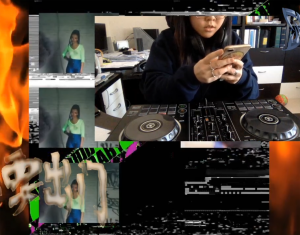
“There’s still a way to preserve a space even if there are no venues,” says SHCR's Katy Roseland, whose station is primed and ready for indoor parties

Read a transcript of an interview conducted by Biba Kopf as part of an article on Neu! in The Wire 208, June 2001

Read an excerpt of Joseph Stannard's interview transcript with the the duo