In The Dark aims to question the way people
think about story telling through sound. To this end, they've
recently started a "Sound Bank", which offers funding of £500–£1500
towards the production of new audio pieces of 3 to 15 minutes.
They're also hosting an evening of audio works at London's
Whitechapel Gallery, 18 November, 8pm.
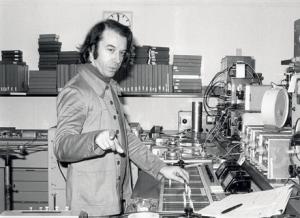
Included are excerpts from orchestral, choral and
electroacoustic works composed over the past three decades,
including Kâmakalâ, Fluctuante-Immuable,
Yo-In, Erkos and Galaxies.
Eloy's Shânti and Gaku-No-Michi,
which have recently been released by the label hors
territoires, was reviewed by Rob Young in The Wire
321

Grand Junction by Charles Linehan and
Exodus, choreographed by Robert Connor and Loretta Yurrick
performed by Dance Theatre Of Ireland.
Charles Linehan will be presenting two new works in
London tonight: one performed to a vintage electronic work by Delia
Derbyshire, one with live music composed and performed by Richard
Skelton (A Broken Consort, Harlassen). London Greenwich Dance,
27–29 October, 7:45pm, £15/£12. Supported by The Wire

Contains excerpts from the forthcoming
documentary Tom Zé: Liberated Astronaut which will be
screened at London's ICA, 29 October, 8:30pm, supported by The
Wire.

Read the unedited transcript of Phil
Freeman's interview with free jazz saxophonist Noah Howard who died
3 September, 2010. An article based on this interview appeared in
The Wire 263, January 2006