
Follow film maker Peter Strickland's top
choice of the web, including sites devoted to favourite Soviet bus
stops, visual music and more. Strickland and his film Berberian
Sound Studio are the subjects of an article by Daniel Spicer
in The Wire 343.
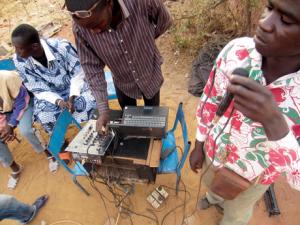
Kirkley, author of The Wire 342
Global Ear article on the 'Balani Show' sound system street parties
of Bamako (capital of Mali) presents a short run down on internet
based ethnography, music collecting and micro genres.

The author of Berlin Sampler curates
a list of archival links on the history of Berlin's music
scene.

Read Ian Rawes of the London Sound Survey
sound map website's top picks of web links. Rawes and the London
Sound Survey are featured in The Wire 341 in an article by
Nathan Budzinski.

Follow the composer and Zeitkratzer founder's
top picks of the web. Friedl is the subject of The Wire
341 Invisible Jukebox, tested by André Vida.

Find out about artist Ruth Ewan's top picks
of the web. Ewan's work is featured in The Wire 340 in an
article by Agata Pyzik.

Find out about Julian Henriques' choice picks
of the web. Henriques is the author of The Wire 340 Global
Ear: Kingston.

Follow Ralph Cumbers aka Bass Clef's top
picks of the web. Cumbers is featured in The Wire 340 in
an article by Joseph Stannard.
Digital transparency has revealed dimensions
to African music beyond Western received ideas. But how to market
it sympathetically, asks Brian Shimkovitz
Digital transparency has revealed dimensions
to African music beyond Western received ideas. But how to market
it sympathetically, asks Brian Shimkovitz

Follow the choice links of Brian Shimkovitz,
the man behind the Awesome Tapes From Africa blog and label, and
author of the Collateral Damage article in The Wire
340.

Follow Atom™ aka Señor Coconut aka Uwe
Schmidt's choice picks of the web.

Follow artist and musician Benedict Drew's
choice links to cartoons, music and other online ephemera. Drew is
featured in The Wire 339 in an article by Nick Cain.
Drew's Gliss exhibition takes place at London's Cell Project Space,
19 April–27 May.
Circulating music as resource-free downloads
might reduce carbon footprints, but the fast turnover of the
computers, MP3 players and mobile phones we play them on costs the
Earth plenty, argues Phil England.
Circulating music as resource-free downloads
might reduce carbon footprints, but the fast turnover of the
computers, MP3 players and mobile phones we play them on costs the
Earth plenty, argues Phil England.

Find out about sound poetry via online
resources, as selected by Julian Cowley, author of the sound poetry
Primer in The Wire 339.

Follow Hanna Tuulikki's choice selection of
links. Tuulikki is featured in an article by Clive Bell in The
Wire 338.